
Friends of Walgrove funds enrichment programs that LAUSD does not: theater, arts, STEAM, and outdoor learning in the Wildlands. Here is what your donations pay for.
Musical Theater
Walgrove Musical Theatre is a free after-school program open to Walgrove students grades 1-5. Students develop skills in acting, dancing and voice, culminating in a final performance of a different musical each May. In 2019 Walgrove Musical Theatre traveled to Neverland in Peter Pan Jr. In 2021 The Walgrove Musical Theatre students rose to the challenge of performing Alice In Wonderland Jr. virtually from their homes In 2022 the Walgrove Elementary School Auditorium was transformed into Pride Rock when students presented Lion King Jr. In 2023 students learned that Anything Can Happen if You Let It as Walgrove Musical Theatre presented Mary Poppins Jr. It has been demonstrated through research that students who engage in the arts at their school have higher attendance rates, demonstrate higher academic performance on tests and in qualitative research studies, and have higher graduation and college attendance rates. Additionally, it has been shown that students experience greater self-esteem, self-efficacy and have a stronger sense of how they can make an impact in their broader communities. We have seen students grow artistically and thrive as independently responsible citizens within a tight-knit ensemble.
P.S. Arts
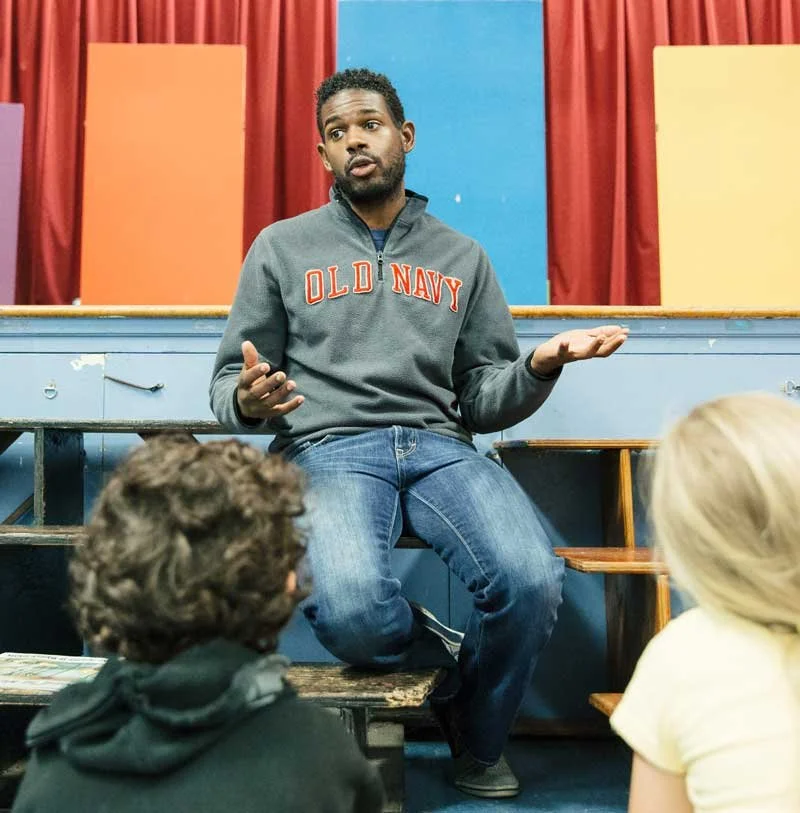 P.S. Arts’ programs are rooted in the viewpoint that learning is a hands-on, constructive process driven by students’ prior knowledge, and natural curiosity. P.S. Arts Teaching Artists tailor arts activities to encourage learning through inquiry, experimentation, and collaboration, and focus on global mindedness, and innovation. P.S. Arts programs also emphasize the role of empathy, caring, and authenticity in effective teaching practice. Finally, P.S. ARTS programs recognize the key role of community and intergenerational engagement in building and maintaining healthy, high-performing schools.
During the school year, curriculum is focused around Maya Angelou's poem "Life Doesn't Frighten Me."
STEAM Studio
STEAM Studio is Walgrove's own unique, progressive, and ever-evolving program. The STEAM Studio was created to provide students with the opportunity to develop the critical thinking, problem solving, communication, collaboration and innovation skills necessary for the modern world. Our program invites students to discover and explore, while demonstrating respect, responsibility and a strong sense of community. The STEAM Studio is a supportive and enriching environment driven by the interests of the children. The hands on projects typically integrate two or more of the S.T.E.A.M. disciplines (Science, Technology, Engineering, Art, and Mathematics) employing the tenets of Project-Based Learning (PBL) where students divine and complete interdisciplinary projects that solve real-world problems and Arts Integration, which is when one employs one or more artistic discplines to teach math or science -- for example, writing a play where the characters are the elements of the Period Table, during whichtime one learns the elements of screenwriting or playwriting alongside those of chemistry OR building a diorama of the universe, applying the principles of Pointillism. Walgrove's STEAM Studio creates the conditions for students to fully engage in authentic learning activities. We strive to involve children in cross-discipline and project-based explorations that instill within them a lifelong curiosity about art and science. We challenge them to learn how to seek solutions to problems that exist without their own communities and around the world. In STEAM Studio, we value process over product, and encourage intellectual risk-taking. There are no mistakes, only opportunities. Meet our STEAM Studio teachers Francesca Forcucci and Gela Kalaitzidis and visit our STEAM Studio Insta page.
The Walgrove Wildlands
The Walgrove Wildlands is an urban eco-lab, native ecosystem, and National Wildlife Federation Monarch Butterfly Way Station. Students can explore science, mathematics, writing, and S.T.E.A.M. in a constantly evolving environment.The Walgrove Wildlands were created with the following guiding principles:
- Create a schoolyard habitat that restores native species and works towards recreating a native ecosystem on campus.
- Create a hands-on, outdoor laboratory in which students learn about science, ecology, and environmental stewardship.
- Pursue a joint-use agreement to make greened area available to the community after school hours.
- Encourage the community to take ownership of the habitat and to participate actively in its maintenance through regularly scheduled (monthly) work days.
We are excited to be part of a larger movement of school and community-based organizations across CA, the US, and world who see schoolyard habitats as powerful educational tools for enriching school landscapes and, in the process, creating exciting hands-on learning opportunities for students.The native ecosystem where the Wildlands were built is known as “Coastal Sage Scrub.” Coastal Sage Scrub includes four specific types of plant systems: Woodland, Meadow, Chaparral, and Riparian (wetland). These plant communities were here long before any asphalt or buildings sat on Walgrove’s campus. The Wildlands restore the land to its natural state, even including a vernal, or seasonal pool, right where the arroyo now stands. Woodland Woodlands are areas dominated by large trees but also include many other plants such as shrubs, small trees and herbaceous plants. Plants to look for: Oak Tree, Sycamore Tree, and Manzanita. Meadow Meadows are comprised of flowers, grasses, roots and decaying vegetation from previous years’ growth. Plants to look for: Poppy, Tidy Tips, and Lupine. Chaparral The California coastal sage and chaparral is part of the Mediterranean forests, woodlands, and scrub biome. Plants to look for: Palo Verde, Lemonade berry, Hummingbird Sage, Milkweed, and Ceanothus. Wetland/Riparian All wetlands have three characteristics: water, saturated soil, and plants adapted to wet conditions. Plants to look for: Willow Trees, Alder Trees, Wire Grass, and Deer Grass. Looking Ahead Walgrove is collaborating with Cal-Poly (Pomona) Landscape Architecture M.A. Candidate, Lisa Strong, on plans to build a sensory garden in the Wildlands.
Outdoor Education
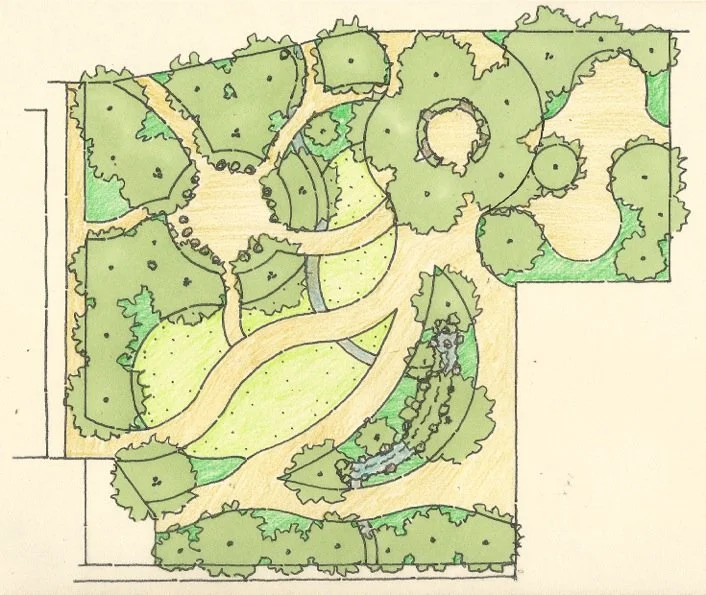 Envisioned as an outdoor classroom, The Walgrove Wildlands is used by our educators for everything from science and environmental studies to math to English and writing to S.T.E.A.M. studio lab. The Walgrove Wildlands has even hosted theater performance by Mr. Donzell's Theater Arts classes!
View a list of plants found in The Wildlands in the Walgrove Wildlands Teachers' Guide written by Wildands designer and collaborator Ryan Drnek.
Monarch Butterfly Waystation
The Walgrove Wildlands is a certified National Wildlife Federation Monarch Butterfly Way Station. At Walgrove we cultivate monarch butterflies' host plant, milkweed, and invite them to make our campus their home. Students love to watch the life cycle and delight in learning all about this beautiful creature.